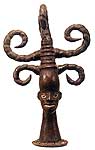
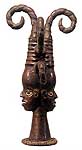
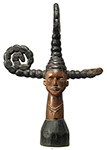
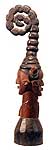
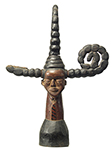
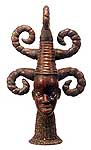
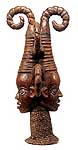
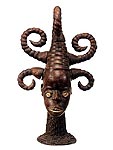
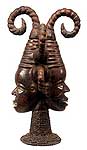
  EJAGHAM STYLE JANUS HEADDRESS 41 27.5" high SOLD |
| EJAGHAM STYLE JANUS HEADDRESS 41 27.5" high SOLD |
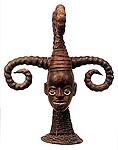 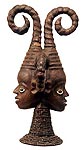 JANUS HEADDRESS 44 24.5" high SOLD |
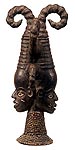 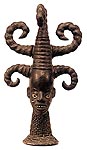 JANUS HEADDRESS 46 25.5" high SOLD |
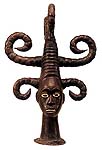 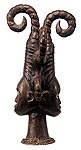
JANUS HEADDRESS 43 26" high SOLD |
JANUS HEADDRESS 51 26" high SOLD |
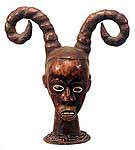 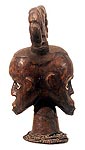 JANUS HEADDRESS 50 18" high SOLD |
JANUS HEADDRESS 48 26" high SOLD |
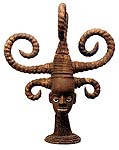 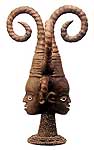 JANUS HEADDRESS 47 30" high SOLD |
JANUS HEADDRESS 49 31" high SOLD |
EJAGHAM ( EKOI ) STYLE JANUS HEADDRESSES ARCHIVES, Nigeria
These Ejagham styleJanus headdresses show no evidence of age or use and were probably made to be sold.
In the southeastern forest region of Nigeria, the Ejagham (Ekoi) people live in a politically decentralized group of small, scattered villages with with several clans united under the leadership of a priest/chief (Ntoon). A Ntoon is responsible for the ritual activities of the community while the political functions are performed by various societies of elders and age-grade associations of young men.
The important art forms of the Ejagham people are connected with the institution of the Ntoon and with the men's and women's associations. The best known of these art forms are the large, skin-covered headdresses (crest masks), which may have one, two or even three faces, and the smaller headpieces, which may represent a head or an entire figure. Crest masks are attached to basketry caps worn on the top of the head. Both types were made by an artist who carved the form from a single piece of wood and covered it with soft, untanned antelope skin that had been soaked in water for several days. He stretched and tacked the skin into place until it dried and stiffened. Eyes, scarifications, and hair were often carved separately and pegged into the finished piece. Before being worn, the headdress was painted or colored, then adorned with metal pieces, wooden pegs, real hair, porcupine quills, feathers, or feathered rods stuck into holes at the top.
The opposing sides of janiform masks (either crest masks or helmet masks) represent male and female faces. The male side was normally stained a dark color while portions of the female side were left the natural lighter color of the antelope skin.
Much of this material has been taken from a wonderful book: A History of Art in Africa published by Harry N. Abrams. The relevant chapter is Cross River by Robin Poyner.
TRIBE |
OBJECT |