Beadwork Exhibition
This page is a record of an exhibit that took place
in 1999. The individual links below will take you to
the CURRENT VERSION of the pages
that formed part of that exhibit. |
Our second exhibit of African beadwork reinvents the wonderful color,
design, intricacy and symbolism of the original show in 1992, with all new
pieces. Most critical is the distinction that this is not an exhibit about
beads, but how they are used, in a variety of objects that different cultures
in Africa have created and decorated, working with small glass trade beads
and cowrie shells.
Yoruba beadwork from Nigeria is the most varied, ranging from a large
selection of king's crowns, hats, dance panels, diviner bags and sashes,
belts, vests and staffs, plus bowls and shrine objects adorned with cowrie
shells.
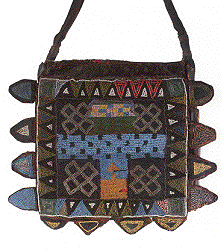
YORUBA, BEADED DIVINER'S BAG, 11", Nigeria
The Kuba of the Democratic Republic of Congo, known for their abstract
design sense, contribute belts and a group of traditional headdresses intricately
embellished with patterns of paint, beads and cowries.
From Cameroon we have several tall, bead-on-cloth Bamileke elephant
masks with animal crests plus a group of massive, heavy Bamun bushcow
helmet masks completely covered with beads. From the Namji we have
a beautiful collection of small, but powerful ritual dolls.
Ndebele works from South Africa include many examples of jocolo and
mapoto beaded aprons, other related ritual pieces, plus dolls.
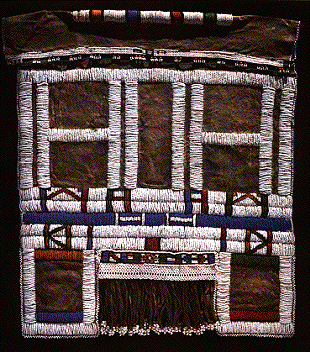
Ndebele, Mapoto Apron, South Africa
From Tanzania and Kenya in east Africa we are showing Maasai neck
ornaments, necklaces, embelllished leather cloaks and guord containers and
some small abstract Kamba pieces.
To round out the show there are also works from the Bamana, Senufo
and other peoples, objects from Ethiopia and selections of beaded
jewelry. Everything reveals the importance of beadwork to African culture
and revels in the love and care put into each piece.
African Beadwork is open April. 2 - May 29. We will be installing on Weds..and
Thurs, March 31 - April 1; feel free to stop by. To celebrate the show and
welcome you, we are having an Opening Party Sat. April. 3, from 12-4. Coming
June 3 - July 31: "Royal Arts of Africa".
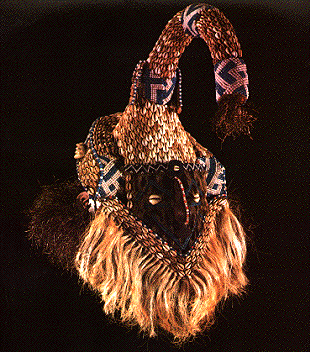
KUBA, MWAASH A MBOY MASK, Zaire © John Urban
This complex mask, with its elephant trunk and leopard skin, represents
kingly power in a ritualized reenactment of Kuba mythological origins and
royal power struggles. Portraying both the god Woot and the first
king, the character marries his sister, Ngaady A Mwaash, and contests
with his brother, Bwoom, who speaks for the commoners. As with most
Kuba art, the piece is highly covered with geometric abstract designs.
KUBA, NGAADY A MWAASH MASK, Zaire
This mask, covered with geometric designs typical of Kuba art, portrays
the wife of the first Kuba king in a ritualized reenactment of Kuba mythological
origins and royal power struggles. A Kuba ideal of beauty, Ngaady A Mwaash
was fought over by Mwaash A Mboy, her husband and king, and his brother,
Bwoom.
GO TO BEADWORK PAGE