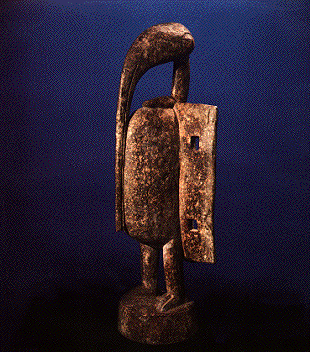
SENUFO, HORNBILL FIGURE, Ivory Coast
Photograph © John Urban
This page is a record of an exhibit that took place in 1991. The individual links below will take you to the CURRENT VERSION of the pages that formed part of that exhibit. |
The Senufo poople, from NE Ivory Coast in West Africa, produce masks
and sculpture for symbolic ceremonies to assure the continuity of their
village life. This exhibit attests to the range and power of that tradition.
Masks in the show are mostly helmet masks of the "firespitter"
type, which combine the aggressive features of several animals. The kunugbaha
(no homs) and kponiugu (horned or doubleheaded) styles were all used
in anti-witchcraft dances.
Strongly stylized figures represent ancestors, and were often used as deble
(rhythm pounders) during processions and dance rituals. Some are among
the largest and boldest forms in traditional African art. Textiles, stools,
beds and other artifacts complete a powerful show. Hornbill figures, called
Setien or Porpianong, were used by the Lo and Poro societies. A symbol
of fertility and the original ancestor cult, the hornbill was the mythological
founder of the Senufo people. The figures were originally worn on the head
during long dances and processions. The Setien, hermaphrodictic,
represent procreation, with their long hooked beaks touching their protruding
stomachs that they have fertilized, therefore being the carrier of life
and a symbol of continuity to future generations.
Hornbills are noble birds; they mate for life, they share equally in the
raising of their young who they protect by spreading their wings. They are
depicted in their erect, protective stance.
The variety of size, style, skill and surface finish reflects the range
of the more than a million Senufo peoples living in the Ivory Coast, Mali,
Burkina Faso and Ghana.
TRIBE |
OBJECT |