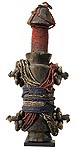
Doll 11 9" high $350 |
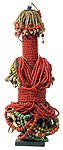
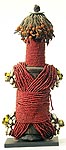 FALI Doll 15 9" high $500 |
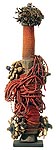
Doll 17 9" high $500 |
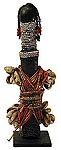
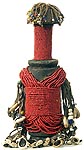
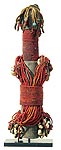
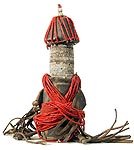 Doll 19 10.5" high $500 |
Doll 21 10.5" high $400 |
Doll 22 9" high $500 |
Doll 11 9" high $350 |
FALI Doll 15 9" high $500 |
Doll 17 9" high $500 |
Doll 19 10.5" high $500 |
Doll 21 10.5" high $400 |
Doll 22 9" high $500 |
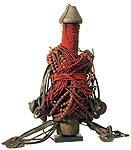 Doll 23 7.5" high $400 |
Doll 25 10.5" high $500 |
Doll 26 9" high $400 |
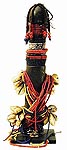 Doll 1 9" high $350 |
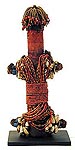 Doll 7 8.5" high $400 |
Photographs © Hamill Gallery
FALI, RITUAL DOLLS, Cameroon
In addition to the rich display of beads, many of these dolls are adorned with cowrie shells, seed pods and coins from the 30's - 50's from British West Africa, the Confederation of Nigeria, French Equatorial Africa and possibly other colonies. The coins are very difficult to read without cleaning them and it is usually only possible to see one side.
In Cameroon, when a young Fali man becomes betrothed, he makes a doll (ham pilu) from wood and decorates it with hair, beads, and other small objects. He then gives it to his fiancee, who wears it in a baby carrier on her back. The doll is a symbol of their marriage commitment and represents their future child. The man gives the doll the gender that he desires for his first-born. The young woman cares for the figure until the promised child is born; at this point, the couple carefully stores the doll away. ---From ISN'T S/HE A DOLL, PLAY AND RITUAL IN AFRICAN SCULPTURE (1996) by Elisabeth Cameron
TRIBE |
OBJECT |