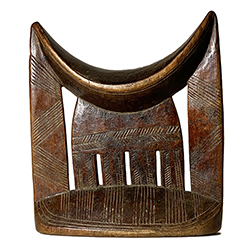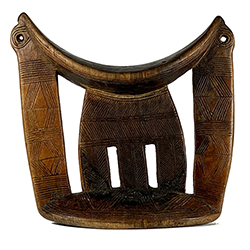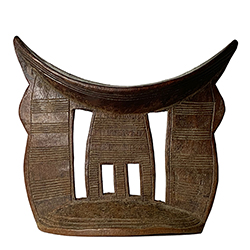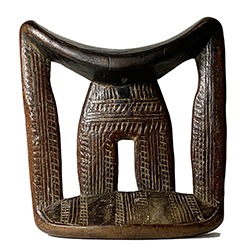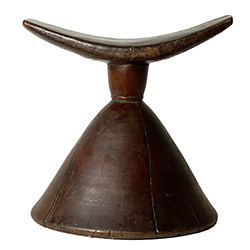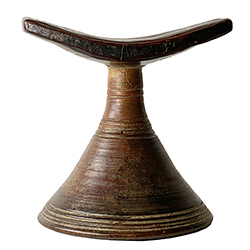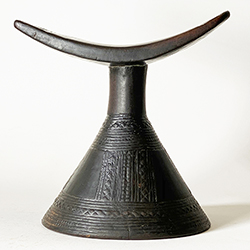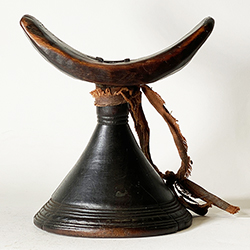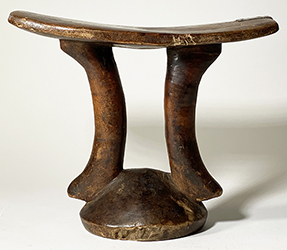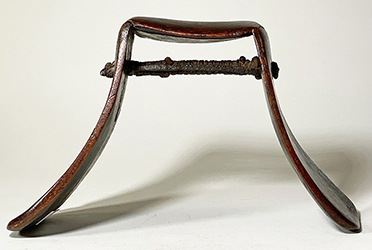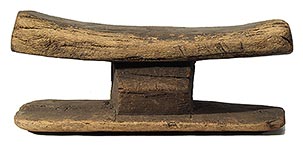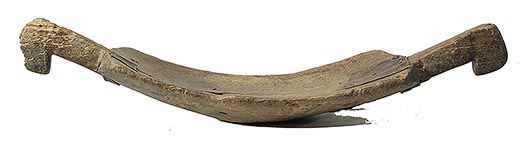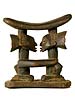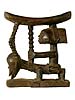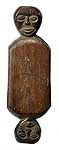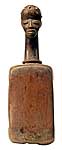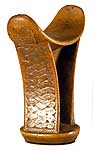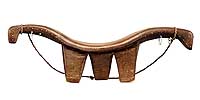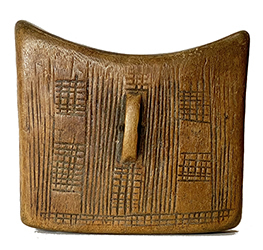
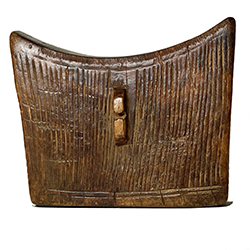
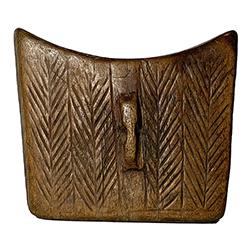
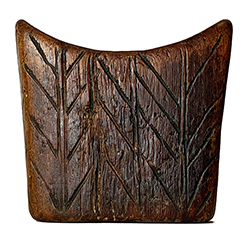
In many African cultures, small wooden "pillows" are
used to support the head during sleep and in some instances to preserve
a hairstyle. In Ethiopia, the headrests come in several forms and relate
to other intricate, but abstract works.
Most Luba art relates to kings and important chiefs, who defined
their power by the display of prestige objects during important ceremonies.
Headrests were more personal, and were used primarily to support the neck,
preserving the elaborate hair styles traditional among the Luba people.
Motifs included figures, pairs of figures, a figure on horseback and more.
The user was literally as well as figuratively supported by the carved figures,
which also symbolized the continuity of power in a matrilineal society.
Elaborate coiffures and scarification patterns attested to the high rank
of both the depicted figure and the owner of the headrest. Similar in style
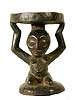
and quality are Luba stools, among the most prized in Africa.