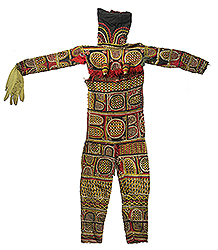
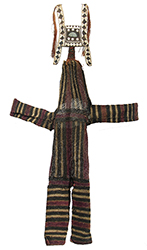
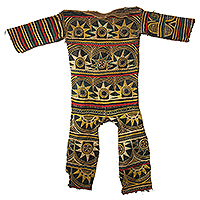

For those Internet clients who have not visited us and know us only in cyberspace, we'd like to introduce ourselves as an actual destination, which now, in 2019, is CLOSED. Formerly housed in a nineteenth-century wallpaper factory, Hamill Gallery devoted16,000 square feet to an ever-growing collection of traditional African art. Our exhibition space was divided between two floors with an additional two floors required to accommodate an inventory of about 40,000 objects. About half of these are on the website.


and Matt Mrachek

and
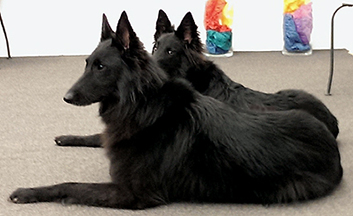
our Director of Security, Gnash Hamill, with his assistant, Pepper Mrachek.
Outside the gallery over 70 major exhibits have been arranged for New England museums and college or school galleries, and we have cooperated with numerous other galleries, community events, fund-raisers and educational projects. For a listing see: Gallery History.
Traditional African artworks are often not well understood. They all served a nonartistic function, to preserve and convey beliefs and values. The masks were part of full costumes and were used with music and dance in rituals for social control, education, status or entertainment. The figures depicted ancestors or spirits, and were venerated and received offerings in exchange for protection and well being. Answers to difficult questions about use and function can usually be found in our extensive reading room/bookstore. The sculptural power and artistic skill, however, are immediately evident
TRIBE |
OBJECT |