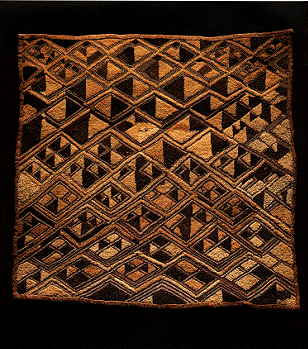
KUBA, Shoowa Textile, 23", Zaire © John Urban
KUBA, Shoowa Textile, 23", Zaire © John Urban
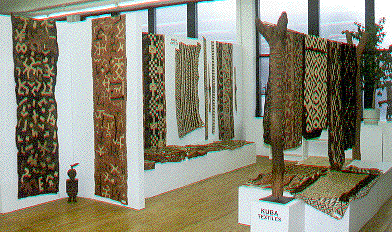
The gallery begins its ninth season with a show of traditional tribal raffia
textiles from the Kuba kingdom in the Congo. This major exhibit includes
hundreds of beautifully designed works, large and small and in many styles,
to show the spiritual beauty, complex interplay and variety in these treasures
of textile art. Collected by Matisse, Klimt and Klee, they influenced modern
art early this century and continue to speak to us today.
Kuba skirts, Tcaka, long cloths from 8 - 25 feet long, from the Ngeende,
Bushoong and Ngongo peoples incorporate appliqued "patches",
embroidered shapes and patterns, openwork, tie-dye, cowrie shells, barkcloth
and border elements. All are covered with geometric symbols; many are restrained,
subtle and rhythmic designs using one technique; others create amazing quilt-like
assemblages of old pieces of many forms. The full skirts are worn bunched
up and wrapped around many times. The exhibit also includes smaller, ornate
pieces and individual panels from the large skirts.
The true jewels of textile art are the smaller Shoowa cut-pile
cloths. Their compex interplay of geometric symbols, inventive rhythm and
balance, uniquely individual designs and tight "velvet"surfaces
created objects so mysteriously alluring the Kuba people traded them as
currency and were the standard by which a family's wealth and status were
judged. This is an opportunity to see, handle and own museum quality textiles.
Kuba Textiles is open Dec. 3 - 23 and Jan. 2 - 30, 1999. The week between
Christmas and New Years we are open only by appointment. We will be installing
on Weds.and Thurs., December 2 & 3; feel free to stop by. To celebrate
the new show and welcome you, we are having an Opening Party Sat. December
5, from 12-4. Coming next: "Art of the Nupe", Feb. - March , 1999.
KUBA, SHOOWA TEXTILE, Zaire
These raffia cut-pile cloths, woven by men, were embroidered by women with
no stitching visible on the back. Highly prized for their inventive patterns,
they are further embellished with tight tufting, leading to the nickname
"Kasai velvet". They were sewn together for ceremonial dress,
covered royal stools, and even exchanged as currency. As a sign of status
they were buried with kings or those fortunate enough to own many.
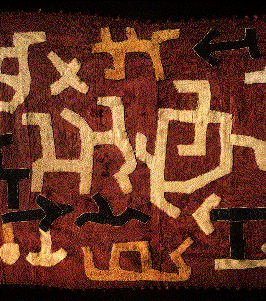
KUBA, Ngeende skirt detail, 29"x216", Zaire © John
Urban
KUBA, NGEENDE DANCE DRESS, Zaire
The appliqued "patches" originally repaired holes, then developed
into traditional design motifs. Made from raffia, the long cloth, many 16-20
feet long, were wrapped around many times and worn as a skirt or dress.
[RETURN TO HOME PAGE] [CONTACT GALLERY] [ORDERING] [HYPERLINKS]