|
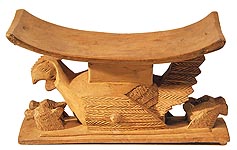
STOOL 17 17" high x 21.5" long SOLD |
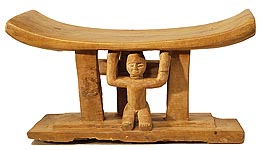
STOOL 21 15" high x 22" long SOLD |
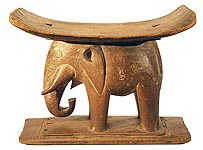
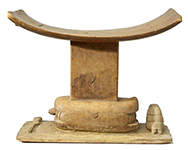
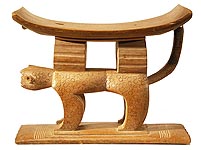
STOOL 3 12" high x 21" long SOLD |
STOOL 19 13.5 high x 25" long SOLD |
|
STOOL 17 17" high x 21.5" long SOLD |
STOOL 21 15" high x 22" long SOLD |
STOOL 3 12" high x 21" long SOLD |
STOOL 19 13.5 high x 25" long SOLD |
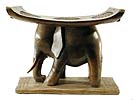 STOOL 1 SOLD |
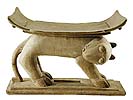 STOOL 2 SOLD |
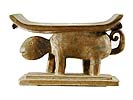 STOOL 4 SOLD |
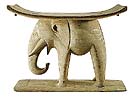 STOOL 5 SOLD |
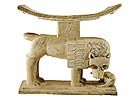 STOOL 6 SOLD |
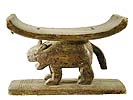 STOOL 7 SOLD |
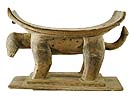 STOOL 8 SOLD |
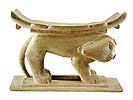 STOOL 10 SOLD |
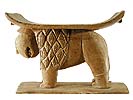 STOOL 12 SOLD |
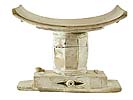 STOOL 14 SOLD |
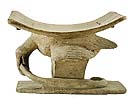 STOOL 15 SOLD |
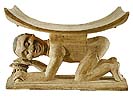 STOOL 16 SOLD |
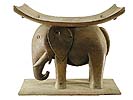 STOOL 18 SOLD |
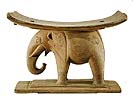 STOOL 20 SOLD |
STOOL 24 SOLD |
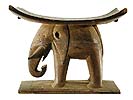 STOOL 11 16.5 x 20.5" SOLD |
ASANTE (ASHANTI), CEREMONIAL STOOLS, Ghana
Stools indicate status, power and succession of chiefs and kings. Carved from single blocks, Asante (or Ashanti) stools traditionally have crescent-shaped seats, flat bases and complex support structures, which exist in many designs with symbolic meaning. Asante stools are spiritual as well as practical. They were understood to be the seat of the owner's soul and when not in use were leaned against a wall so that other souls passing by would not settle on it.
Animal designs include:
The design of an leopard or jaguar, an Osebo Dwa, symbolizes the power of the Asantahene.his design of an leopard or jaguar, an Osebo Dwa, symbolizes the power of the Asantahene.
The design of a lion with prey, symbolizes the power of the Asantahene, or king.
The design of an elephant, an Esona Dwa, designates this as a stool used in the past only by the Asantahene, or king.
GO TO ASANTE ANIMAL STOOLS
PAGE
GO TO ASANTE ANIMAL STOOLS
ARCHIVES PAGE (ALL SOLD)
GO TO ANIMALIA EXHIBITION PAGE
|
TRIBE |
OBJECT |
|